Introduction — IT Equipment Rental
Technology has become an essential part of almost every business operation. From employee onboarding and software development to training programs, temporary offices, and corporate events, businesses need reliable computers and other IT equipment to keep their teams productive.
However, technology requirements do not always remain the same. A company may hire 20 new employees for a project, open a temporary office, conduct a training program, or expand its operations for a few months. Buying new equipment for short-term needs raises upfront costs and often leaves businesses with idle hardware afterward.
This is where IT equipment rental can provide a practical alternative.
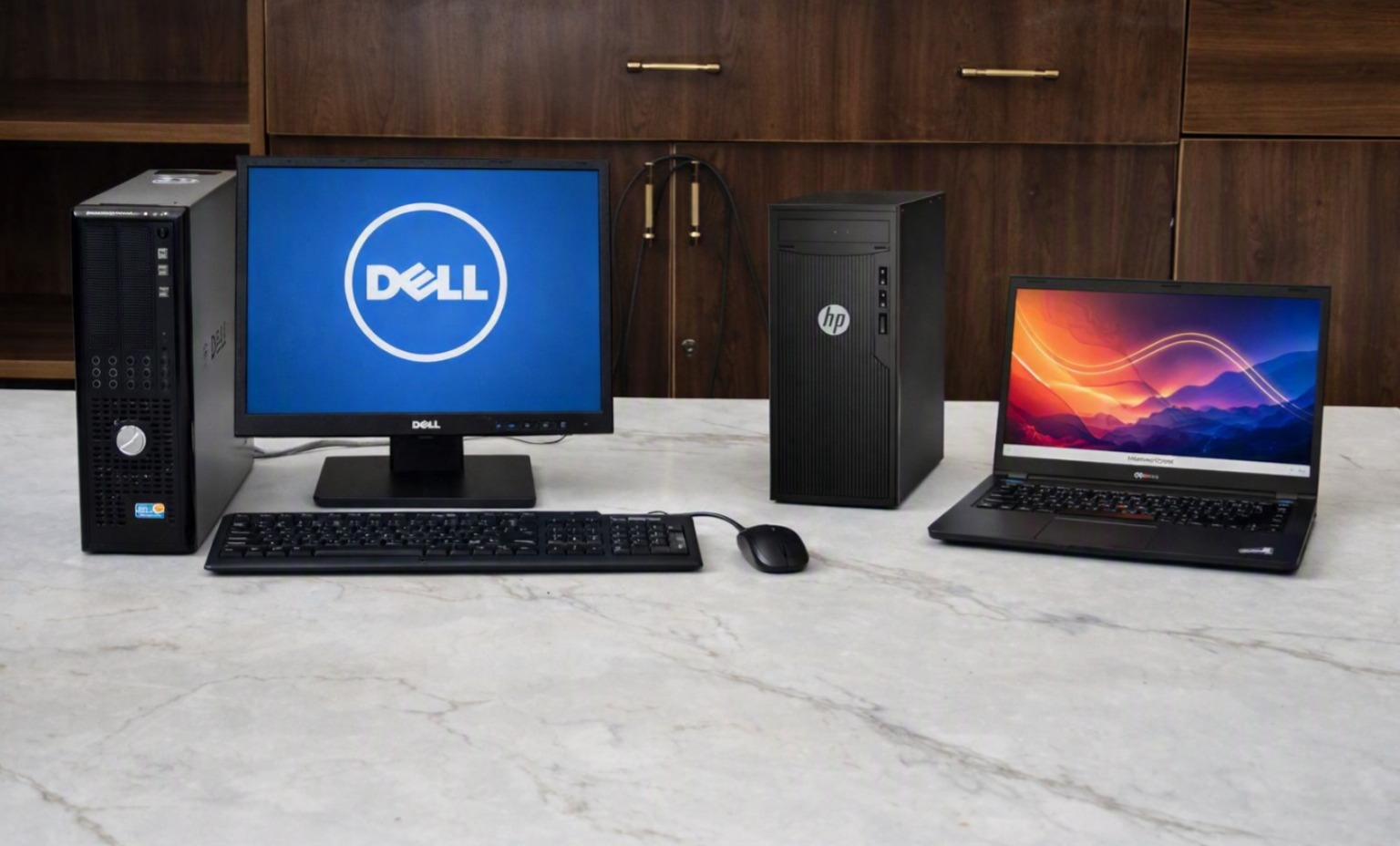
Instead of purchasing every device outright, businesses can rent the equipment they need for a defined period. Depending on the requirement, this may include laptops, desktops, workstations, servers, printers, and other business technology.
For companies operating in Bangalore, particularly in business hubs such as Electronic City, IT equipment rental can provide the flexibility needed to respond to changing workforce and project requirements.
What Is IT Equipment Rental?
IT equipment rental is a service through which businesses use technology hardware for an agreed rental period instead of purchasing the equipment permanently.
Rental requirements can range from short-term projects to long-term business deployments. Depending on the provider and availability, businesses may rent:
- Business laptops
- Desktop computers
- Workstations
- Servers
- Printers and scanners
- Monitors and related accessories
The configuration can also be selected according to the intended workload. For example, a general office employee may require a standard business laptop, while a designer, developer, engineer, or technical professional may need a higher-performance workstation.
A professional rental provider can help businesses identify suitable hardware based on the number of users, required specifications, rental duration, and intended use.
Why Businesses Choose IT Equipment Rental
Business technology requirements can change quickly.
A startup may begin with a small team and add employees as it secures new projects. An established IT company may need additional systems for a temporary development team. A training institute may require dozens of computers for a specific batch. An event organizer may need equipment only for the duration of an event.
In such situations, purchasing permanent hardware may not always be the most flexible approach.
IT equipment rental allows businesses to align their technology resources more closely with their actual operational requirements.
Instead of treating every hardware requirement as a permanent asset purchase, companies can evaluate whether renting makes more sense for the specific situation.
10 Business Benefits of Choosing IT Equipment Rental
1. Supports Workforce Expansion
Employee growth often creates an immediate need for additional computers.
Suppose a company has 50 employees and wins a new project requiring another 20 team members. The company may need additional laptops, desktops, monitors, and other equipment before the new employees can begin working.
Purchasing all this hardware at once requires additional capital and procurement time.
With business IT equipment rental, companies can arrange the required devices for the new employees and adjust their hardware fleet as the workforce changes.
This can be particularly useful for:
- IT companies
- Startups
- BPOs
- Consulting firms
- Training organizations
- Project-based teams
- Growing enterprises
The objective is simple: provide employees with the technology they need without unnecessarily locking the company into permanent hardware ownership.
2. Makes Temporary Projects Easier to Manage
Not every business project lasts for several years.
Companies frequently work on projects that have defined start and end dates. During these periods, additional employees and equipment may be required.
For example, an organization may need 30 laptops for a six-month software development project.
Buying 30 laptops creates an asset-management responsibility after the project is completed. Renting can allow the company to plan its hardware requirement around the project period.
This makes IT hardware rental worth considering for businesses with fluctuating project requirements.
3. Helps With New Office Setup
Setting up a new office requires more than furniture and internet connectivity.
Employees may need laptops or desktops, monitors, printers, servers, and other IT infrastructure from the beginning.
Purchasing everything at once can increase the initial setup budget.
For businesses testing a new location, establishing a temporary project office, or rapidly expanding their workspace, renting selected equipment can provide a more flexible approach.
Companies can determine which equipment needs to be permanent and which equipment can be rented according to the expected duration of the requirement.
4. Useful for Employee Onboarding
Employee onboarding can sometimes happen faster than expected.
A company may recruit a large group of employees for a new project and need to provide working computers immediately.
Waiting for a lengthy procurement process can affect productivity and project timelines.
With laptop rental for business, organizations can arrange business-ready laptops for new employees based on availability and required specifications.
This can be especially useful when:
- A new project is starting
- A company is hiring in bulk
- Remote or hybrid teams are expanding
- Temporary employees are joining
- A new branch is being established
A flexible hardware strategy can help the IT and HR teams coordinate employee onboarding more efficiently.
5. Provides Flexibility for Training Programs
Corporate training programs and educational workshops often require multiple computers for a limited period.
A training organization may need 20, 50, or more systems for a particular batch but may not need the same number of computers throughout the year.
Instead of maintaining a large permanent hardware inventory, organizations can explore rental options for specific training requirements.
Depending on the program, they may require laptops, desktops, monitors, or other equipment.
This makes IT equipment rental particularly relevant for:
- Corporate training
- Technical workshops
- Certification programs
- Skill-development programs
- Educational institutes
- Recruitment training
- Internship programs
6. Helps Businesses Handle Events and Temporary Installations
Corporate events, exhibitions, conferences, seminars, and recruitment drives can also create temporary technology requirements.
Event organizers may require computers for registration desks, presentations, demonstrations, data entry, attendee management, or other activities.
Buying equipment for a one-time event may not be practical.
Rental allows businesses to evaluate their requirement based on the event duration and number of users.
For organizations that regularly conduct events, maintaining a relationship with a reliable IT equipment provider can also simplify future deployments.
7. Reduces the Need for Unused Hardware
One of the challenges of purchasing IT equipment is predicting future requirements accurately.
A company may purchase 100 computers expecting continued expansion, but if hiring slows down, some of those systems may remain unused.
Unused hardware still occupies storage space and loses value over time.
A rental-based strategy can provide more flexibility when demand is uncertain.
Businesses can rent additional equipment when required rather than purchasing large quantities based solely on projected future growth.
8. Allows Different Teams to Use Different Configurations
Not every employee needs the same hardware.
A finance employee may primarily use office applications, spreadsheets, email, and accounting software.
A software developer may require more memory and processing capability.
A designer, engineer, or video professional may require a high-performance workstation.
With a flexible IT equipment rental strategy, businesses can select equipment according to the actual job requirements rather than deploying identical systems to every employee.
Important specifications to consider include:
- Processor
- RAM
- Storage
- Operating system
- Graphics capability
- Monitor requirements
- Connectivity
- Software requirements
Choosing the right configuration can help businesses avoid both underpowered and unnecessarily expensive equipment.
9. Can Simplify IT Budget Planning
Technology budgets can become difficult to manage when businesses need to purchase large quantities of hardware at the same time.
Rental provides another budgeting model where costs are distributed across the rental period.
This can make it easier for businesses to plan technology expenditure around projects, workforce requirements, and operational cycles.
However, businesses should evaluate the total rental cost, contract terms, taxes, deposits, maintenance charges, and other applicable costs before making a decision.
For accounting and tax treatment, companies should consult their financial or tax advisor based on their specific circumstances.
10. Technical Support and Replacement Can Reduce Downtime
Hardware failure can affect employee productivity and project deadlines.
When a business owns its equipment, its internal IT team may need to diagnose the issue, arrange repairs, source replacement parts, and manage the downtime.
Depending on the rental agreement, a professional rental provider may offer maintenance, troubleshooting, or replacement support.
Before signing a rental agreement, businesses should clearly understand:
- Maintenance coverage
- Technical support
- Replacement timelines
- Repair procedures
- On-site support availability
- Escalation process
The lowest rental price is not necessarily the best option if support is inadequate.
Who Can Benefit from IT Equipment Rental?
IT Companies: Project-based teams can use rental equipment when workforce requirements increase temporarily.
Startups: Startups can equip growing teams without making a large hardware investment immediately.
BPOs and Call Centers: Organizations with fluctuating employee requirements can scale their hardware fleet according to staffing needs.
Training Institutes: Training centers can arrange multiple computers for specific batches and programs.
Corporate Offices: Companies can use rental equipment during office expansion, employee onboarding, or temporary projects.
Event Companies: Event organizers can rent computers and related equipment for conferences, exhibitions, workshops, and other programs.
Construction and Engineering Companies: Project teams working from temporary offices can consider rental hardware for the duration of their assignments.
What Should You Check Before Choosing an IT Equipment Rental Company?
Choosing a rental provider should involve more than comparing monthly prices.
Hardware Quality: Check the processor, RAM, storage, operating system, physical condition, and overall configuration of the equipment.
Rental Duration: Confirm whether the provider supports your required rental period, whether it is short-term, monthly, or long-term.
Availability: If you require equipment in bulk, confirm the quantity available before finalizing your project plans.
Maintenance and Support: Understand what happens if a device stops working and how quickly support or replacement will be provided.
Pricing Transparency: Ask for a detailed quotation that clearly explains rental charges, applicable taxes, delivery, installation, deposits, maintenance, and other charges.
Data Security: Businesses should establish appropriate data-security procedures before returning rented equipment. Ask the provider about its equipment-return and data-wiping processes, while also following your company’s internal security policies.
Why Choose Renton Technologies for IT Equipment Rental?
Renton Technologies provides IT hardware rental solutions for businesses with different operational and project requirements.
The company offers rental options covering laptops, desktops, workstations, servers, and printers. Businesses can explore flexible rental periods based on their specific requirements.
Renton Technologies can support requirements such as:
- Corporate office setup
- Employee onboarding
- Temporary project teams
- Training programs
- Events and conferences
- Business expansion
- Bulk hardware requirements
- Long-term IT deployments
Located in Electronic City, Bangalore, Renton Technologies focuses on providing business-oriented IT rental solutions with flexible durations and technical support.
The company states that its rental services can be used for periods ranging from one month to three years, with equipment configurations customizable according to business requirements.
IT Equipment Rental vs Buying: Which Is Better?
There is no single answer for every business.
Buying may be suitable when:
- Equipment will be used for several years
- Workforce requirements are stable
- Hardware specifications are predictable
- The company wants permanent ownership
Renting may be worth considering when:
- The requirement is temporary
- A project has a defined duration
- The workforce is expanding or changing
- A company needs equipment quickly
- A temporary office is being established
- A training program requires multiple computers
- An event requires technology for a limited period
The right choice depends on the company’s budget, expected usage period, workforce plans, support requirements, and long-term IT strategy.
How to Plan Your IT Equipment Rental Requirement
Before approaching a rental provider, prepare a few basic details.
- Number of devices: Determine whether you need 5, 10, 25, 50, or more systems.
- Rental duration: Specify whether you need the equipment for one month, six months, one year, or longer.
- Required configuration: Mention processor, RAM, storage, operating system, monitor, and other specifications.
- Intended use: Explain whether the equipment will be used for office work, software development, training, events, design, engineering, or another purpose.
- Delivery location: Provide the office or project location so the provider can plan logistics and deployment.
Having these details ready can make the quotation process faster and help the provider recommend more suitable equipment.
Conclusion: IT Equipment Rental
Modern businesses need technology that can adapt as quickly as their operations do.
Whether a company is expanding its workforce, starting a new project, opening an office, conducting training, or organizing an event, its IT requirements may change significantly over time.
IT equipment rental provides businesses with an alternative to purchasing every device permanently. By renting the right equipment for the required period, organizations can improve flexibility, manage changing requirements, and avoid investing heavily in hardware that may not be needed later.
The key is to choose a rental provider based not only on price but also on hardware quality, availability, rental flexibility, technical support, replacement policies, and transparent terms.
For businesses looking for IT equipment rental in Bangalore, Renton Technologies offers flexible IT hardware rental solutions covering laptops, desktops, workstations, servers, and printers.
Need IT equipment for your business, project, training program, or temporary office?
Contact Renton Technologies today for a customized rental quotation.
Call: +91 8050281515
Website: www.renton.org.in
Location: Electronic City, Bangalore
Address: Renton Technologies LLP, First Floor, Lava Kusha Building, No. 6/2, Beratena Agrahara, Electronic City, Bengaluru, Karnataka 560100.
Land Mark: Near Damro Furniture
Frequently Asked Questions
Depending on the rental requirement, businesses can rent laptops, desktops, workstations, servers, printers, and other related IT equipment.
Yes. Startups with changing workforce requirements can consider renting equipment to avoid making a large upfront investment in hardware.
Yes. Bulk rental can be considered for employee onboarding, corporate projects, training programs, events, and office expansion.
Rental periods depend on the provider and requirement. Renton Technologies offers flexible rental periods, including long-term options.
Yes. Businesses can discuss combined requirements for laptops, desktops, workstations, servers, and printers based on their operational needs.
Maintenance and support depend on the rental agreement. Businesses should confirm the exact maintenance, troubleshooting, and replacement terms before finalizing the rental.
It depends on the situation. Renting can be particularly useful for temporary projects, workforce expansion, training, events, and other situations where equipment requirements may change.
Businesses in Bangalore can contact Renton Technologies for IT hardware rental requirements. The company is based in Electronic City and provides rental solutions for different business requirements.